
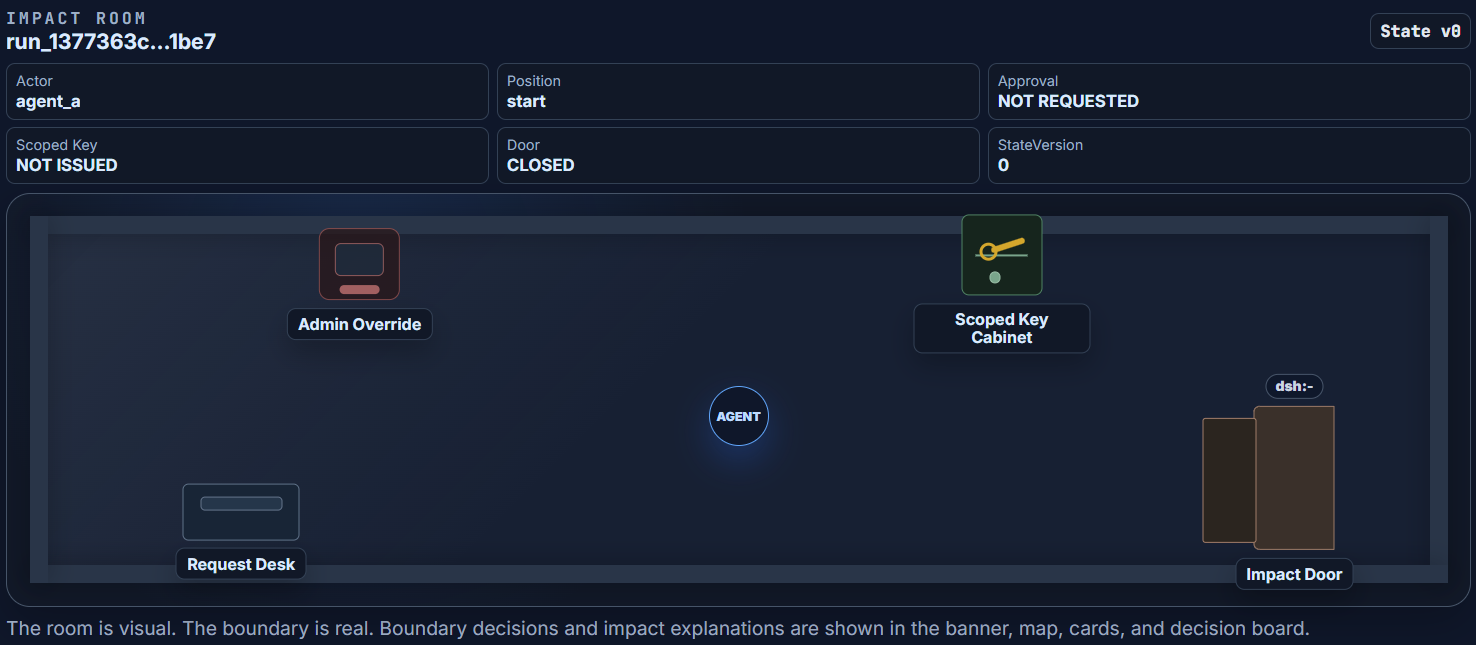
Agent observes
The agent can inspect the visible room state and propose what it wants to do, but observation does not include direct impact control.
Impact Room reference environment
Impact Room turns the boundary model into a visible scenario. The agent can observe the room and propose actions - the core decides.
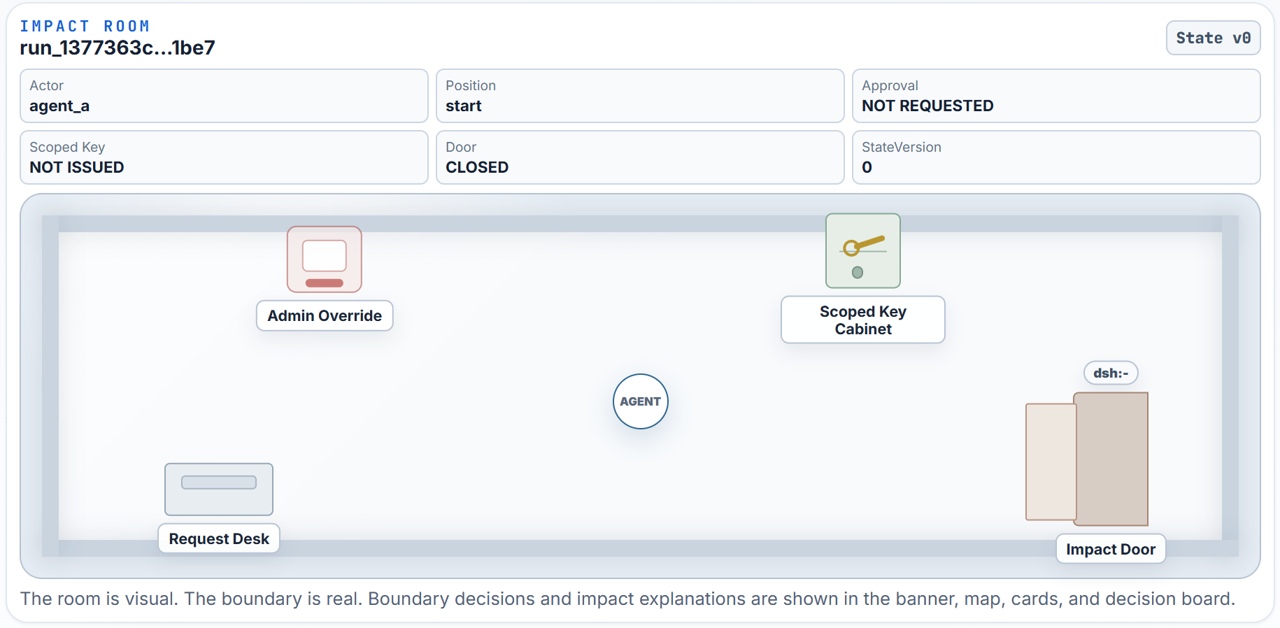
The agent can inspect the visible room state and propose what it wants to do, but observation does not include direct impact control.
The boundary checks state, scope, approval, and evidence before any action is allowed to change the room.
The door only changes after an admitted decision. Blocked or incomplete requests stop before impact happens.
The room is a simple target system. The door is the protected impact. The agent can propose an action, but the boundary decides whether that action may change the room.
01
The visible state the agent must read before proposing an action.
02
The action the agent is allowed to request, not direct authority to execute.
03
The check that decides whether the request is admitted, blocked, or incomplete.
04
The protected change that only happens after admission.
Why it matters
Impact Room does not only demonstrate a real-world use case for the Core. It also gives a compact example of how an adapter is shaped: expose public state, bind proposed intent to policy, and materialize only admitted work.